Wood anemone
Wood anemone
Anemone nemorosa
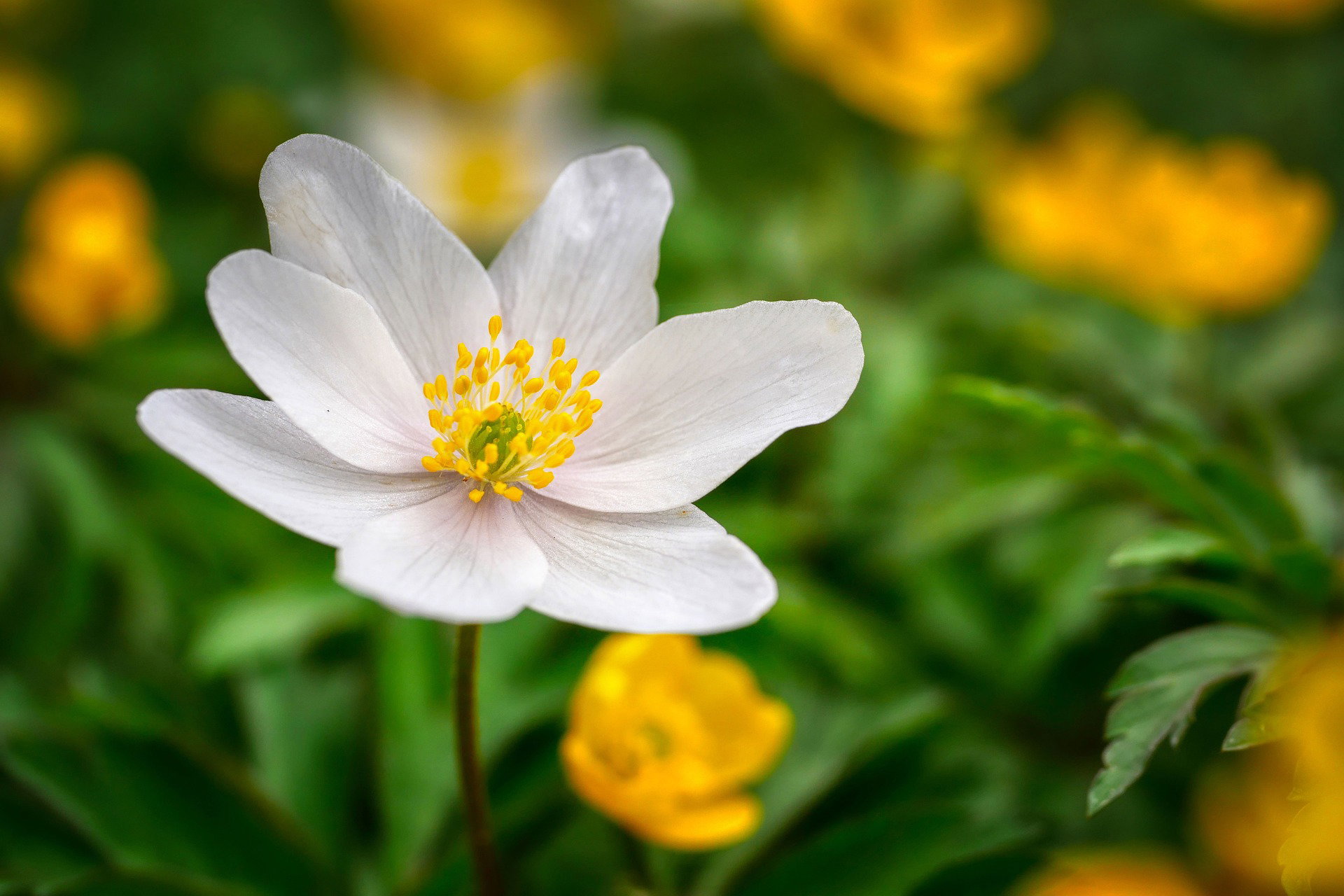
Appearance : A spring flower that everyone knows: the lobed and fresh green leaves, the weak stem and the flower with its 6–8 white calyx petals is one of the most beloved flowers of spring. After the flowers have stood for a while, they become red-edged on the outside and close around the fruiting bodies. By midsummer, both the flower and the leaves have withered.
Favorite environment : Moist soil in meadows, pastures and woodland. Often grows in flooded luxuriance and covers the ground completely.
Distribution : Found in most of the country with the exception of the mountains and the northernmost forest areas.
Flowering time : In May–June at the time of leaf opening.
Fruit and seeds : The seeds, which are as small as ant eggs, attract ants, just like the seeds of the blue sedge. The ants like the oil in the seeds' shell and drag them with them. Where they leave the seeds, a blue sedge plant grows, which spreads further with the help of the horizontal, deep rootstock. Next year's flower shoots are formed on the rhizome during the summer.
Characteristics : Often forms mass vegetation. The similar yellow primrose has, as the name suggests, pure yellow petals.
Close relatives : Yellow-throated pipit, blue-throated pipit, red-throated pipit, back-throated pipit.
Fun fact : In the past, people ate the first white primrose of spring. The white flower was believed to have purifying powers and to protect against misfortune and bring luck in love. But the sap of the white primrose is poisonous, and the plant is said to have even caused fatal poisonings.