Ängsvädd
Meadowsweet
Succisa pratensis
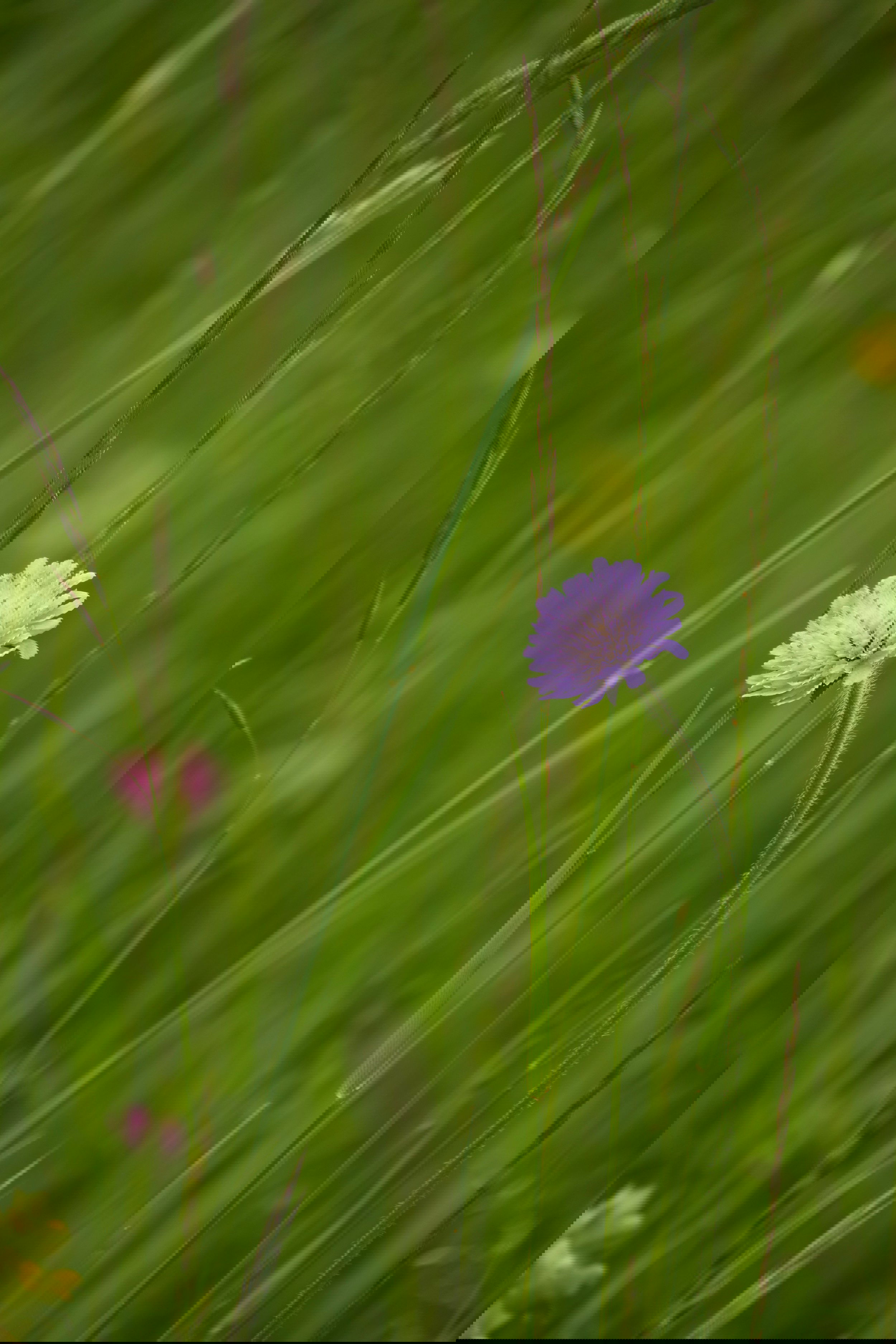
Appearance : A perennial, tall herb with small flower heads at the top of the stems. The individual flowers in the large “flower” have four petals and four long-protruding stamens. The inflorescence resembles a blue button – the herb has also been called blue button. The leaves are oblong, lanceolate and usually entire, sometimes slightly jagged with a few saw teeth.
Favorite environment : Meadows, forest glades, moist grassland.
Distribution : Common up to southern Norrland.
Flowering time : Late summer.
Fruit and seeds : The stem with the seed pod remains as a winter stamen. The fruits catch on passing animals and are dispersed in this way.
Characteristics : The stem, which can grow to 80 cm tall, has opposite leaves. The rosette leaves at the ground are petiolate, the leaves on the stem are not petiolate. The leaves of the meadowsweet are entire. The similar fieldsweet almost always has pinnate leaves.
Close relatives : Field marigold, button marigold, field marigold, burdock.
Fun fact : The vigorous, perennial herb has a sharply cut rhizome. Legend has it that the devil was so enraged by the plant's medicinal properties that he bit off the rhizome – hence the plant's German name, Teufelsabbiss . The root and green parts were once steeped in wine and used as a cure for the plague.