Yellow loosestrife
Yellow loosestrife
Lysimachia vulgaris
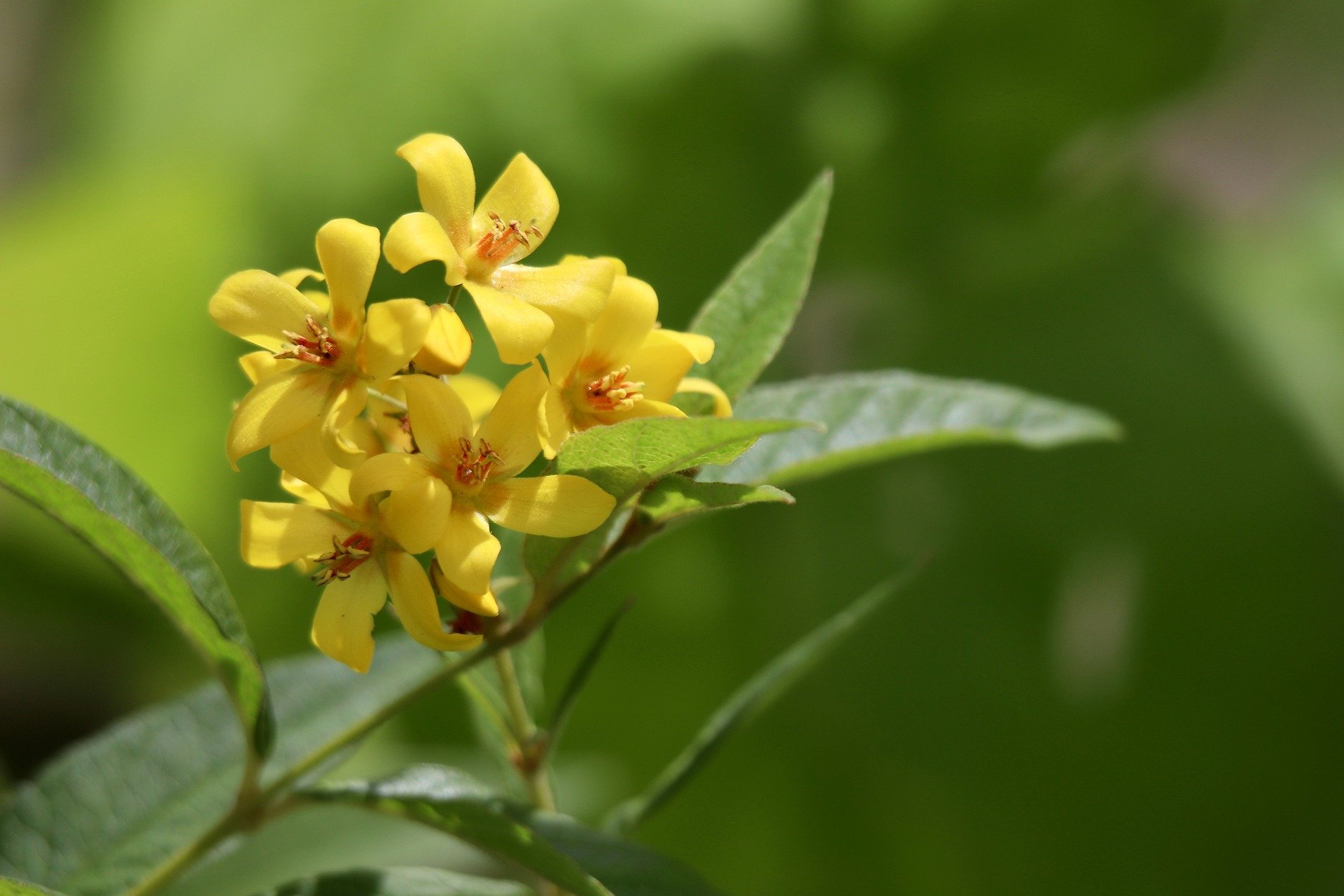
Appearance : The willowherb is a tall plant, often a meter high or more. At the top of the strong stem is a cluster of bright yellow flowers. The long, narrow, pointed leaves, which resemble willow leaves, are arranged in whorls of three, sometimes four leaves. The flowers are pentamerous, meaning they have five petals and five stamens.
Favorite environment : Grows on damp ground, along beaches, ditches and in shady, humus-rich forest soil.
Distribution : Common up to Ångermanland – Jämtland.
Flowering time : July – August.
Fruit and seeds : The willow herb remains as a winter perennial. During the winter, the seeds are dispersed by the plant swaying when the wind catches it.
Characteristics : Recognizable by the tall plants and the luminous flowers, which have given the plant its other Swedish name: lysing.
Close relatives : Pennywort, topless, wood star, red foxglove.
Fun to know : In his “Herb Book,” Linnaeus writes about the viburnum: “for it is so powerful in calming anger, that if it is placed on the yoke between two oxen that are at odds, their anger is calmed, says Pliny.” In the same book, Linnaeus says that you can cure toothache by placing the plant on your head and that it can also be used to chase away flies and snakes.