Tar flowers
Tar flowers
Viscaria vulgaris
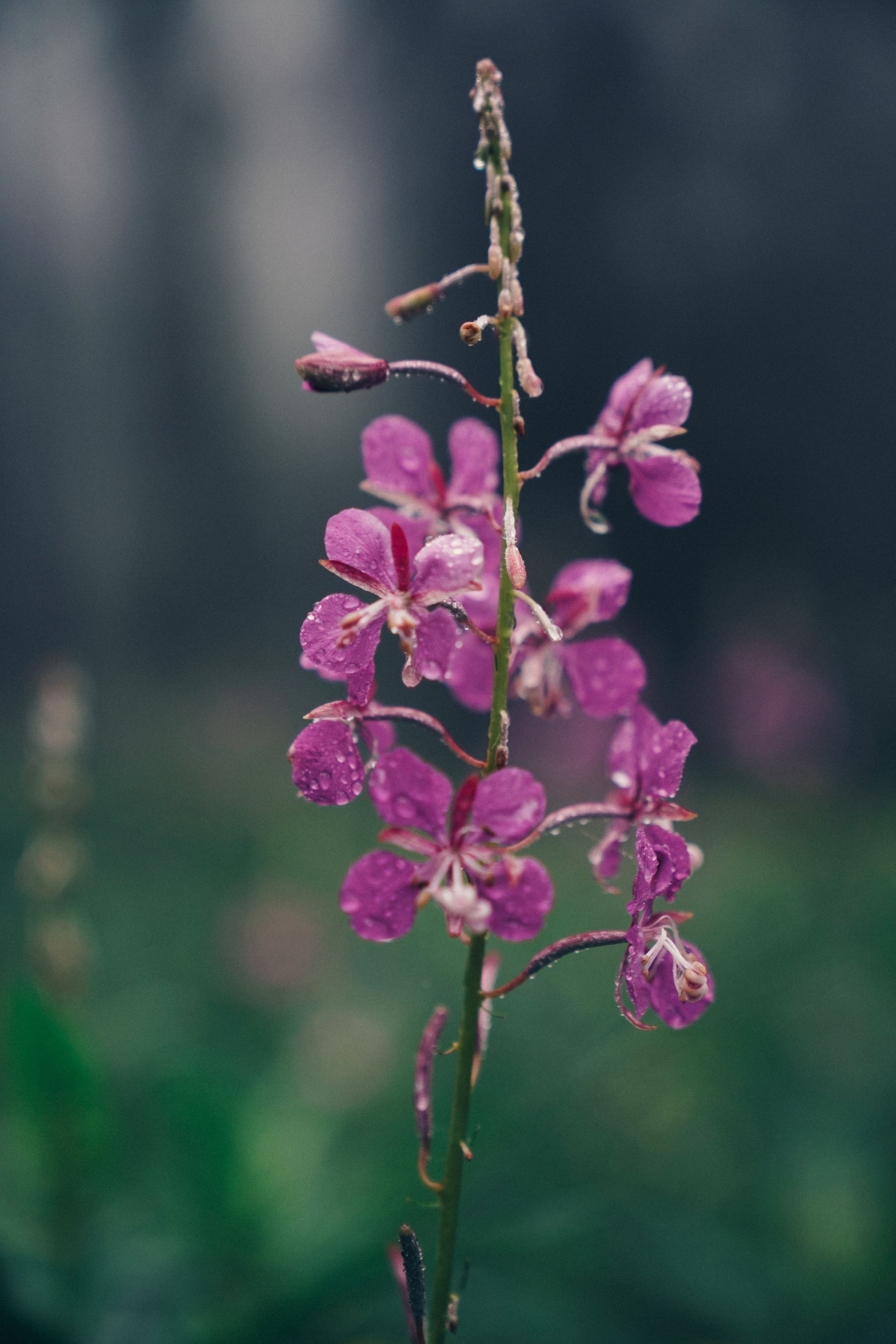
Appearance : The 3–5 dm tall tar flower has long, narrow red or purple petals and resembles a carnation – the plant also belongs to the carnation family. After flowering, a rosette of narrow, lanceolate leaves forms around the rhizome and the stem grows from this rosette the following year. The rather stiff, round stems are blackish-brown and sticky below each joint – hence the name tar flower.
Favorite environment : Rock outcrops, dry slopes, roadsides.
Distribution : Common from Skåne to Värmland and Uppland.
Flowering time : Early summer – midsummer.
Fruit and seeds : When the plant is shaken by the wind, the small seeds are thrown out of the seed pod. They are dispersed during midsummer and autumn.
Characteristics : The black-brown and sticky spots on the stem make the plant easily recognizable even when the flowers are, in rare cases, pink or white.
Close relatives : Cuckoo flowers, red clover, meadow carnation, mountain carnation.
Fun fact : The scientific name Viscaria means glue plant. The sticky parts on the stems at the joints below the leaf attachment act as little glue sticks. Insects on their way up to the flower get stuck in the sticky “tar”. This prevents ants and other small insects, which do not contribute to pollination, from competing with insects that are more beneficial to the plant. Tar flowers are easy to plant in the meadow or plot and thrive in regular garden soil but need a sunny location.