Field anemone
Field anemone
Convolvulus arvensis
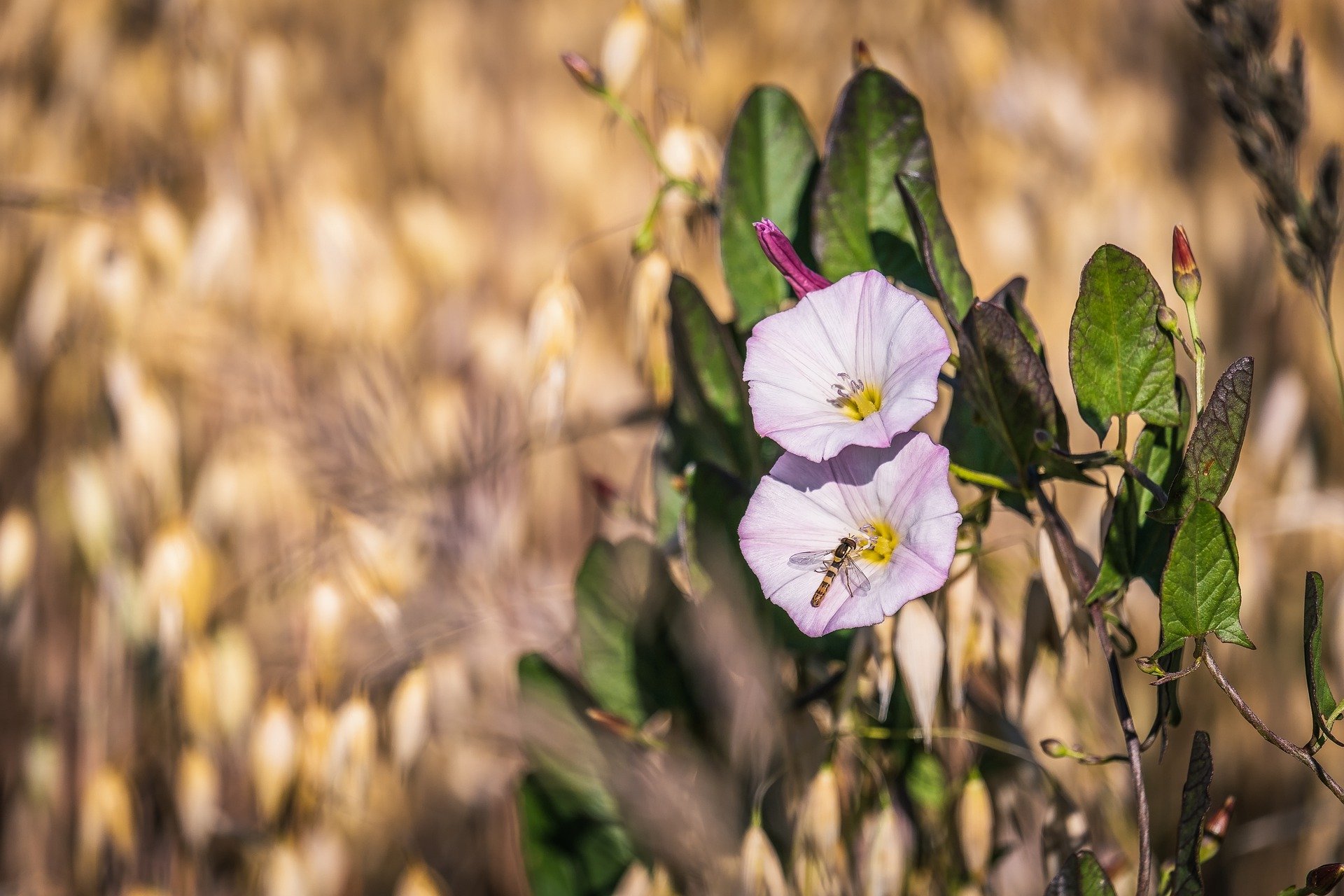
Appearance : The field bindweed is a meter-long herb with a narrow stem that winds upwards around other plants or crawls along the ground in long strips. The large, beautiful flowers are white or light red and look like old-fashioned gramophone funnels. The flowers are about 2.5 cm wide and sit on long stalks in the leaf folds. The stalked and arrow-like leaves sit scattered on the twisted stem.
Favorite environment : Fields, field edges, roadsides, coastal thickets.
Distribution : Found north to the Mälardalskapen.
Flowering time : Late summer.
Fruit and seeds : Four seeds are formed in a two-seeded capsule. The seeds germinate in spring and early summer. The plant can also be propagated by detached parts of the richly branched roots, which form propagating buds.
Characteristics : Bindweed and bindweed ( Convolvulus sepium ) are similar, but bindweed has larger flowers and usually a longer stem. Bindweed has two broad bracts at the base of the flower, something that bindweed lacks. The whorls turn counterclockwise, unlike bindweed, which turns clockwise.
Close relatives : Nettle-tailed grebe, lentil-tailed grebe, heather-tailed grebe.
Fun fact : Field anemone is a difficult weed. It has been given many local and folk names, such as fartarmar and käringtarmar after the tears and förtningar after the leaves. The flowers have given rise to names such as Jungfru Marie kjol and Jungfru Marie särk.